
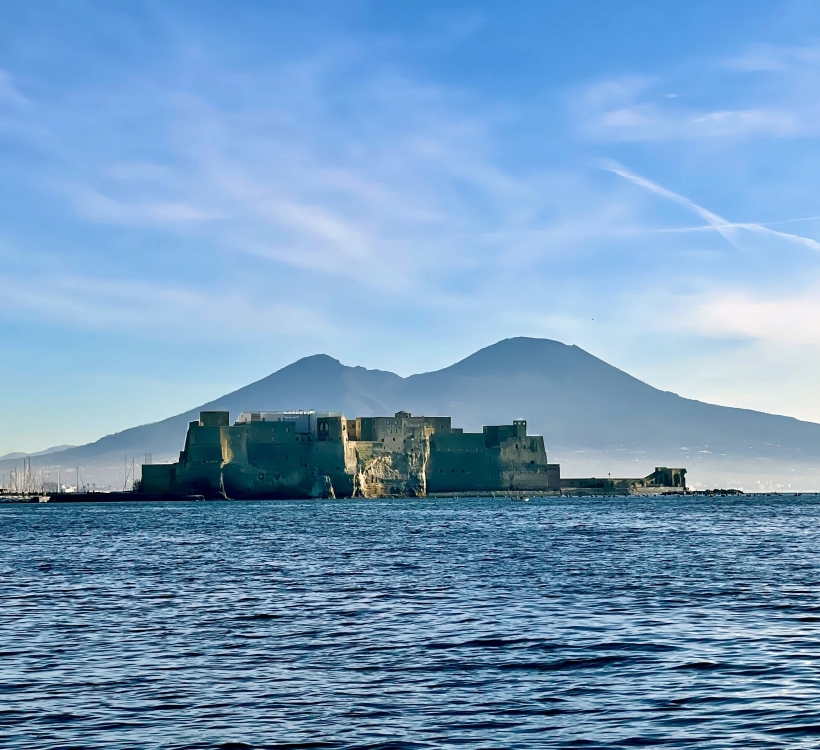
Castel Dell'Ovo seen from the sea - Naples ph RM
The ancient Partenope (later Neapolis today Naples), according to historians, was founded on 21 December 475 BC, the day of the winter solstice, by the Greeks. A city that from its origins binds its destiny and its myth to the sea. In fact, the name of the city is linked to the Siren Partenope, narrated by Homer in the XII canto of the Odyssey, who, together with two other sirens (Leucosia, and Ligea), chose to die for the disappointment of not being able to stop the sailor Ulysses . And when the sea deposited the body of Partenope on the beach of Megaride, where today Castel dell'Ovo is located, this gave life to the city of Partenope.
Continuing to navigate, in the bay of Riva Fiorita, we can admire Villa Volpicelli, a beautiful castle practically in the water set for many years of the Rai TV series "Un Posto al Sole".
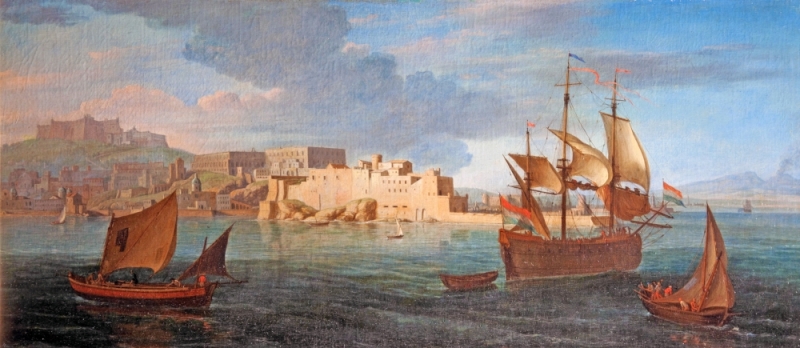
Naples-from-the-sea-Gaspard-van-Wittel
Therefore, rising from the sea, it is seen from the sea which shows its most beautiful, most romantic side and which still today, as the sirens did in the Odyssey, enchants tourists who navigate the waters of its Gulf.
This is why a visit to Naples cannot be said to be complete if you don't rent a boat or rely on an organized tour (see https://www.charter-napoli.it ) to admire it from its most beautiful and romantic side, in particularly if done at sunset. Explore its mermaid-shaped gulf starting from Bagnoli or even Pozzuoli with its Rione Terra, ending at Castel dell'Ovo. Along the way you can admire: Bagnoli, once a ternal area, now behind its long beach, shows what are the remains of the former Ital Sider Steelworks now Industrial Archeology, Continuing, the beautiful hill of Posillipo rises from the sea with the very panoramic Virgilian Park. At its foot there is the islet of Nisida, connected to the earth since 1936, a large rock of Tufaceous stone that still retains all its wild aspect thanks to the fact that, hosting the Juvenile Prison, it is open to the public.
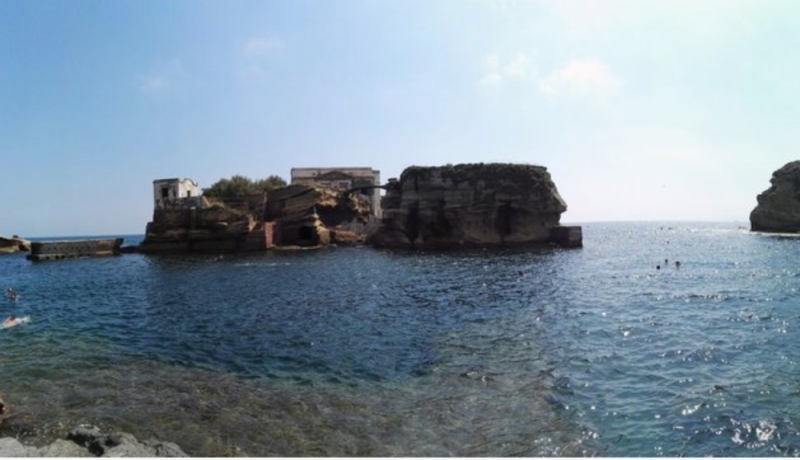
Gaiola Park - Naples
A little further and again on the Posillipo hill, we can admire part of the incredible villa of what was once the Roman nobleman Publio Vedio Pollione, one of the richest patricians of the court of the emperor Augustus. A Villa absolutely worth visiting for the beautiful remains, but above all for the incredible mosaics and for the enormous engineering work of the amphitheater overlooking the sea (work of the 1st century BC). Continuing by sea we meet the beautiful beach of Trentaremi (here it seems that Ulysses also landed) and then the Gaiola nature park, where it is still possible to observe the submerged part of what was once the port of the villa of Pollione. Also in this Naturalistic Park stands the islet of Gaiola (once connected to the earth) that the Neapolitan superstition, due to various events over the centuries, even fatal, would like to jell. Continuing we find the beautiful beach of Marechiaro, the remains of a Roman Nymphaeum from the 1st century BC, now known as the "house of the spirits", the rock of Pietra Salata with the beautiful Villa Rosebery behind it, today the residence of the President of the Italian Republic.
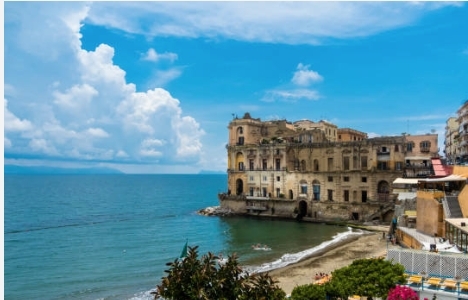
Palazzo Donn'Anna - Naples - ph RM
From here on, continuing towards Castel dell'Ovo, we will meet an endless quantity of beautiful and rich villas, many with private access to the sea or even with private ports (see what was once the residence of the shipowner Achille Lauro), but above all the beautiful Possilipo hill which at night, with its houses perched on it, becomes the protagonist as in a scene of a nativity scene. Last but not least, a little before reaching the Mergellina seafront to admire is Palazzo Donn 'Anna. This one, which was erected in 1600 directly on what were the rocks emerging from the sea by the will of the Noble Donna Anna Caraffa, has never been completed and, therefore, has the charm of the eternal unfinished.


Sign up to receive the latest news and promotions
